
The specialist vs generalist recruiter question is usually argued on principle, and it is really a question of mechanics. Two agencies can have identical skills, identical processes and identical work ethic, and the specialist will win more often. The reason is not quality. It is how buying decisions actually get made.
Why hiring managers choose the specialist
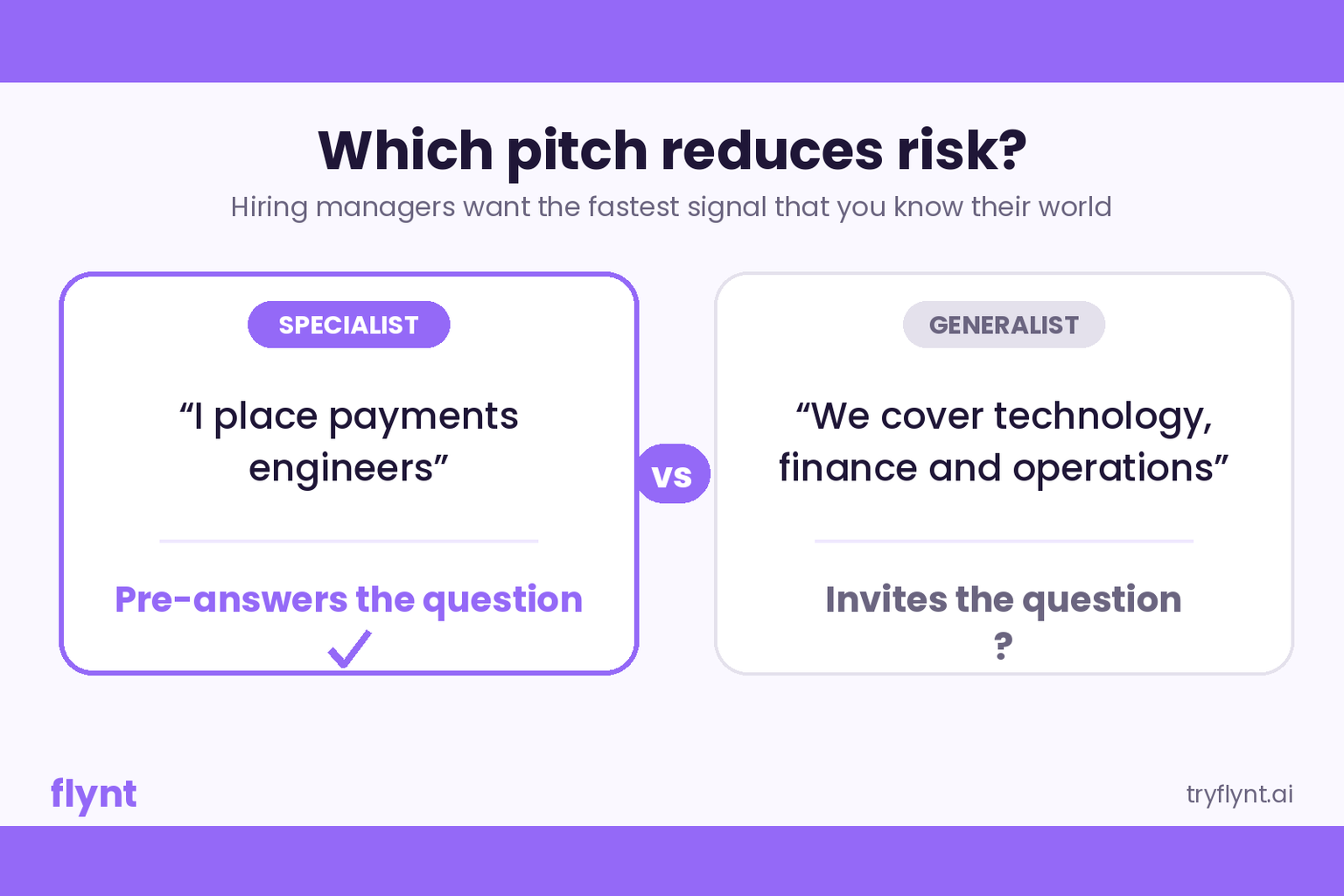
When a hiring manager needs a niche role filled, they are not comparing agencies on a spreadsheet. They are trying to reduce risk quickly, and the fastest signal available to them is whether you obviously already know their world. A recruiter who says "I place payments engineers" has pre-answered the question. A recruiter who says "we cover technology, finance and operations" has invited it.
The candidate network problem
A generalist cannot build a usable candidate network, because the network is spread too thin across too many markets. The specialist knows forty people who could do the role before the brief arrives. That difference shows up as speed, and speed is the thing clients actually judge you on.
What it does to your business development
A specialist knows exactly which companies to watch and exactly which signals matter. A generalist has to decide, every single week, where to point their attention, and that decision costs energy and produces inconsistency.
The two objections, answered
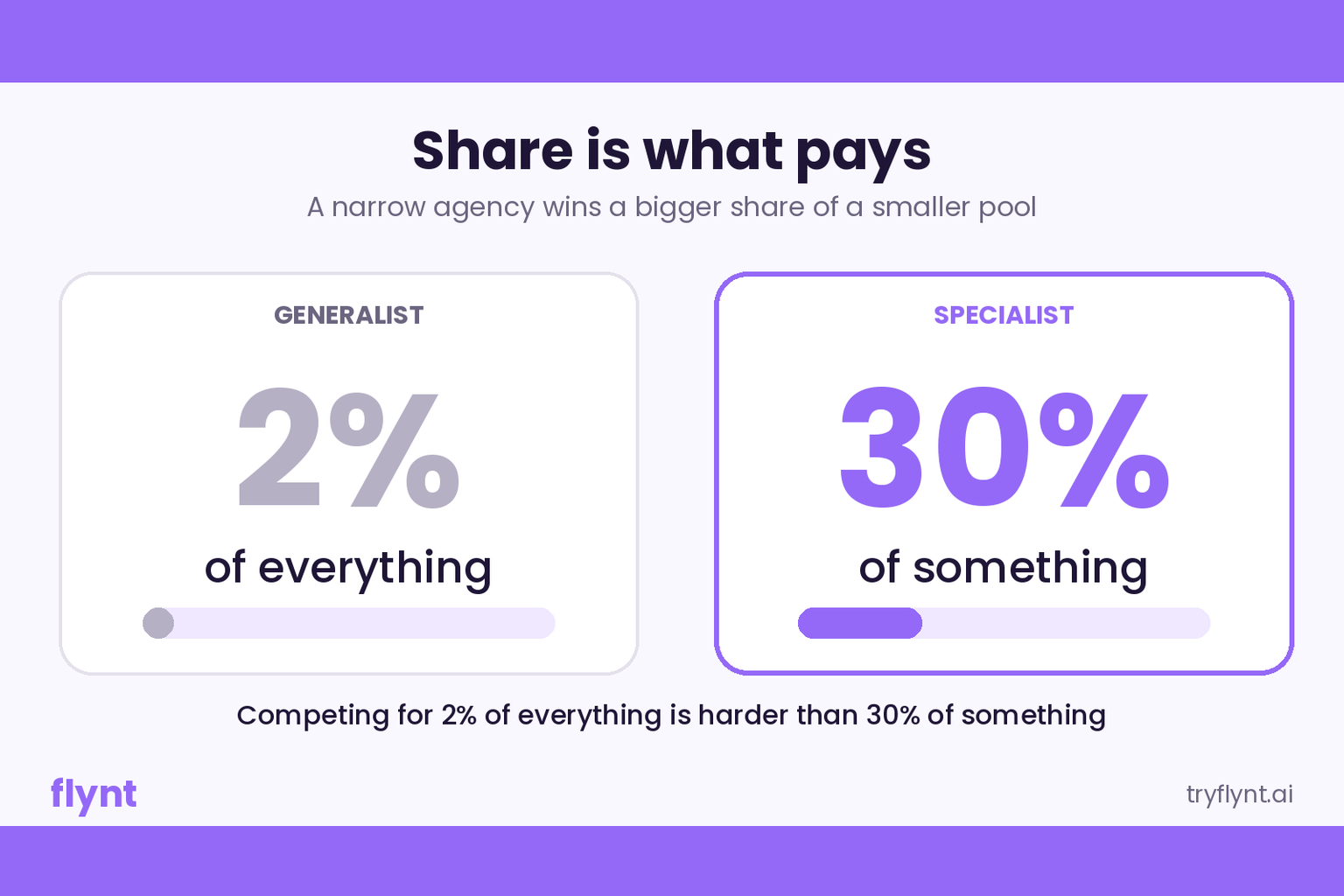
The first objection is fear of a smaller market, and it is usually backwards. A narrow agency in a real market wins a much larger share of a smaller pool, and share is what pays. Competing for two percent of everything is harder than competing for thirty percent of something.
The second objection is more legitimate: a narrow niche can contract. The answer is not to be a generalist, it is to be a specialist with a second adjacent niche developed deliberately once the first is working.
How to narrow without losing your current book
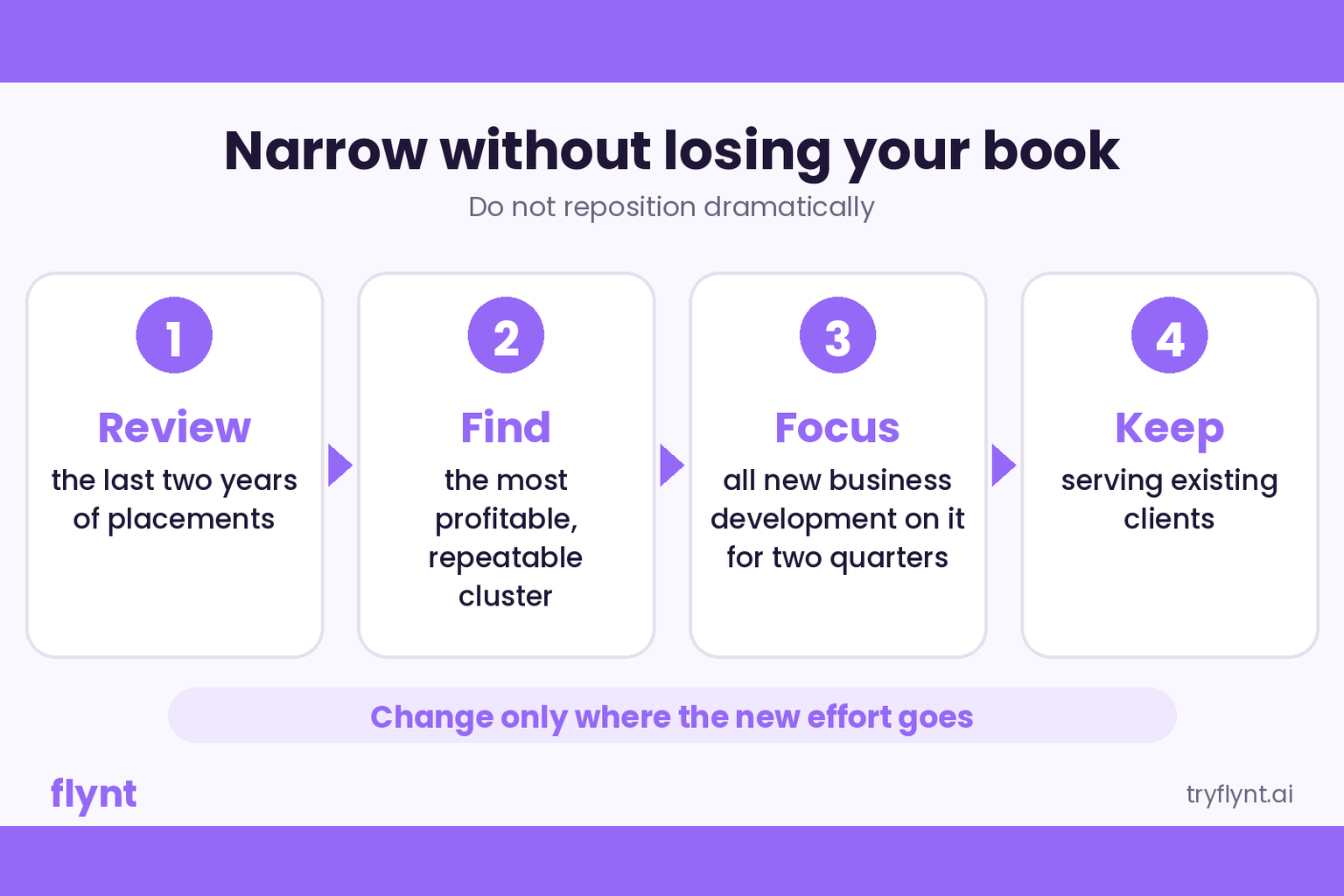
Do not reposition dramatically. Look at the last two years of placements, find the cluster that was most profitable and most repeatable, and point all new business development at that one thing for two quarters. Keep serving the existing clients. Change only where the new effort goes.
Frequently Asked Questions
Should recruiters specialise?
In almost all cases yes, because specialisation improves both your credibility with clients and the quality of your candidate network. The exception is a recruiter in a geographically isolated market where no single niche has enough volume.
How long does it take to become known in a niche?
Usually two to four quarters of consistent business development before the market starts recognising your name, and longer before inbound arrives.
Can a small agency cover two niches?
Yes, once the first is producing reliably. Trying to build two at once usually means building neither.
Specialising only pays if you can see everything happening in your chosen market. Flynt monitors job postings, funding and acquisitions in your niche and tells you which companies to contact today. Try it at tryflynt.ai.