Winning clients from competitor agencies starts with how you handle one sentence: "we already have agencies we work with". Most recruiters treat it as a polite no. It is better understood as a statement of fact that tells you quite a lot.
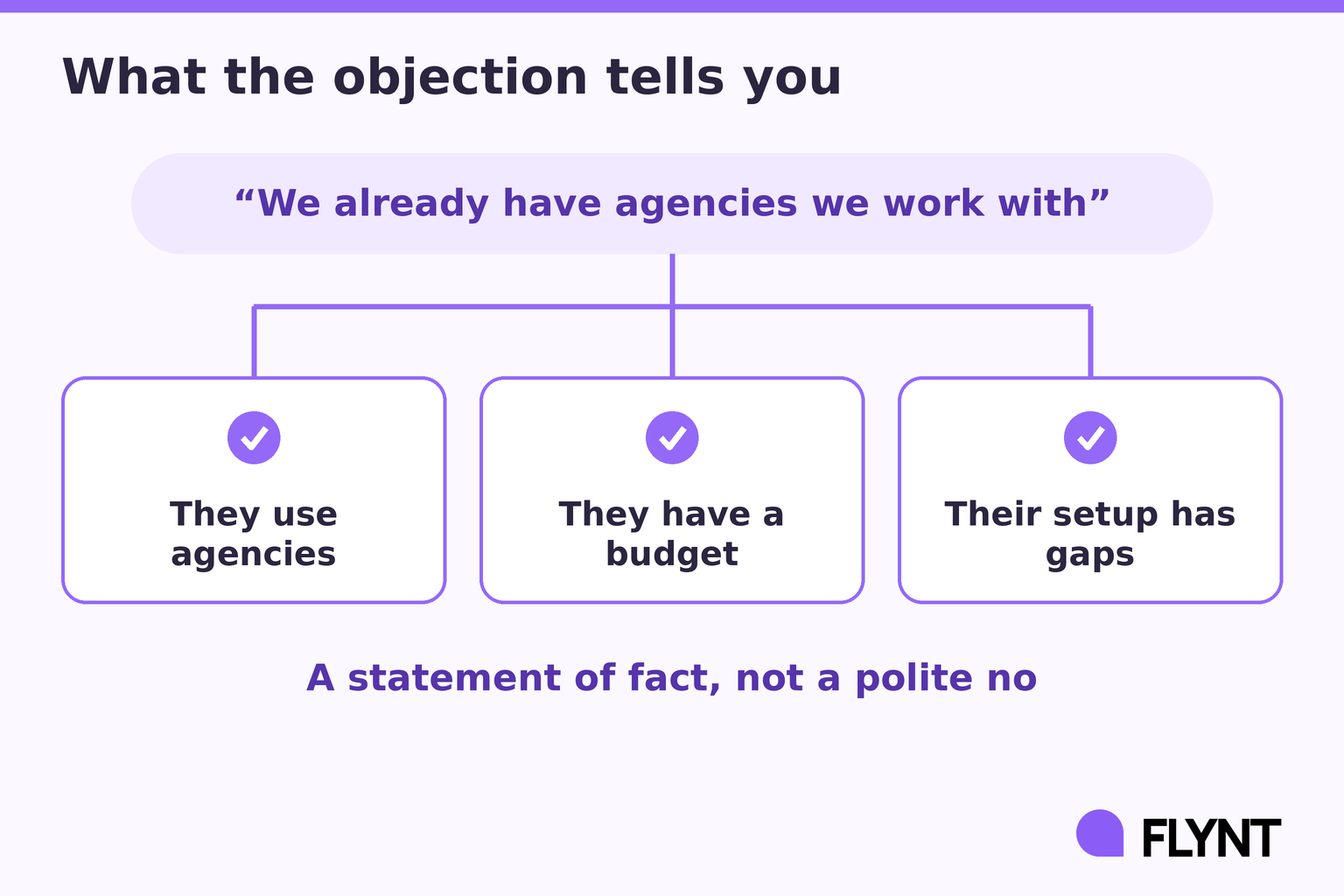
What the objection actually tells you
It tells you they use agencies, which eliminates the biggest objection in the category. It tells you they have a budget. And it tells you that their current arrangement has gaps, because every agency arrangement does.
The two responses that lose
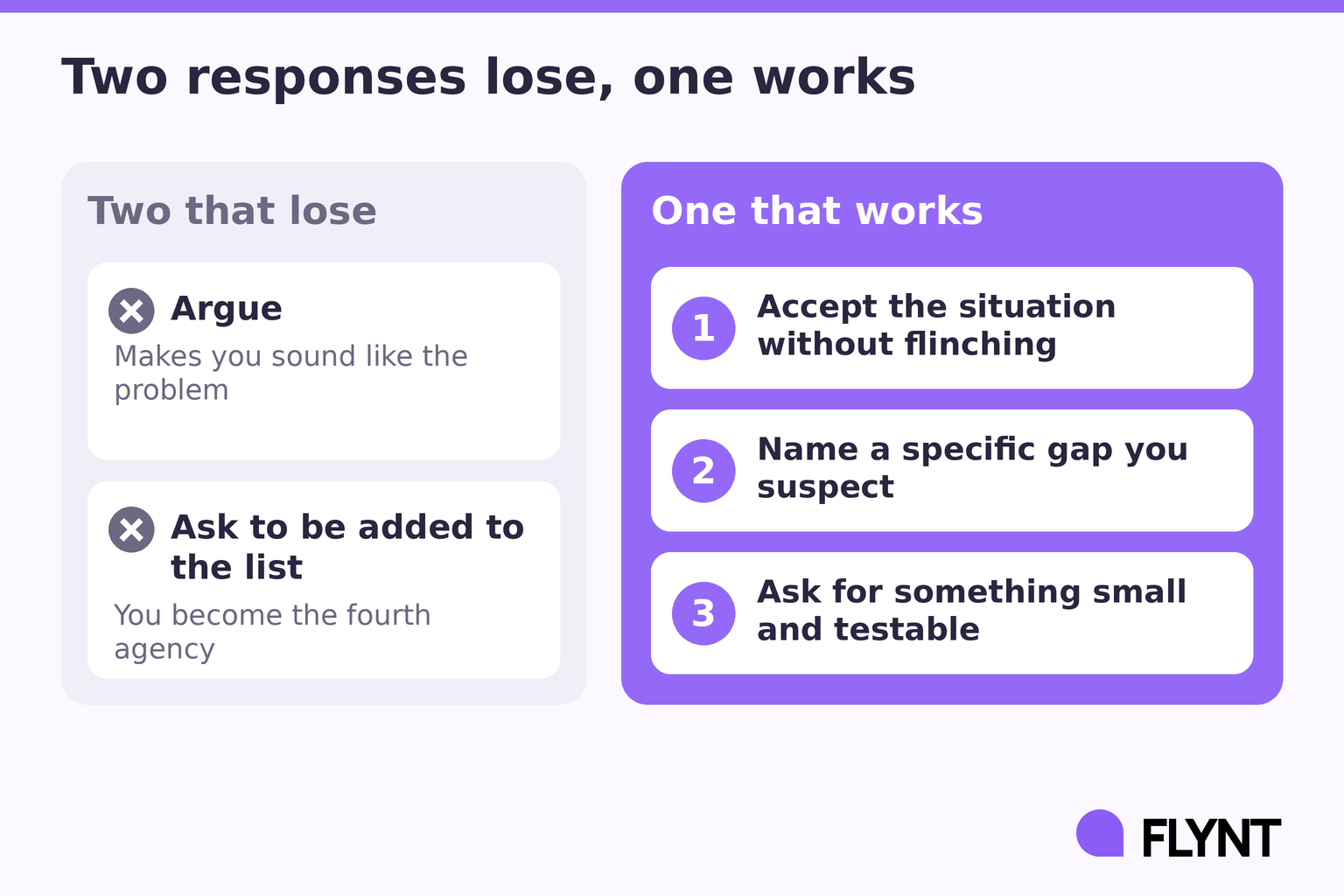
The worst is to argue. Criticising incumbents makes you sound like the problem rather than the solution, and the hiring manager may have chosen those agencies personally.
The second worst is to ask to be added to the list. Being the fourth contingency agency on a role is a bad job: you compete against three firms with longer relationships, you work for free until someone places, and the client has no incentive to prefer you.
The response that works
It accepts the situation without flinching, names a specific gap you suspect exists, and asks for something small and testable.
"That makes sense, most companies your size do. The thing agencies usually struggle with in your market is the senior platform roles, because the people who can do them are not applying anywhere. If that is ever the shape of the problem, I would be interested in taking one."
That works because it does not ask to replace anyone. It offers to take the role nobody else can fill, which is both the easiest thing to say yes to and the fastest way to prove you are different.
Playing the longer game
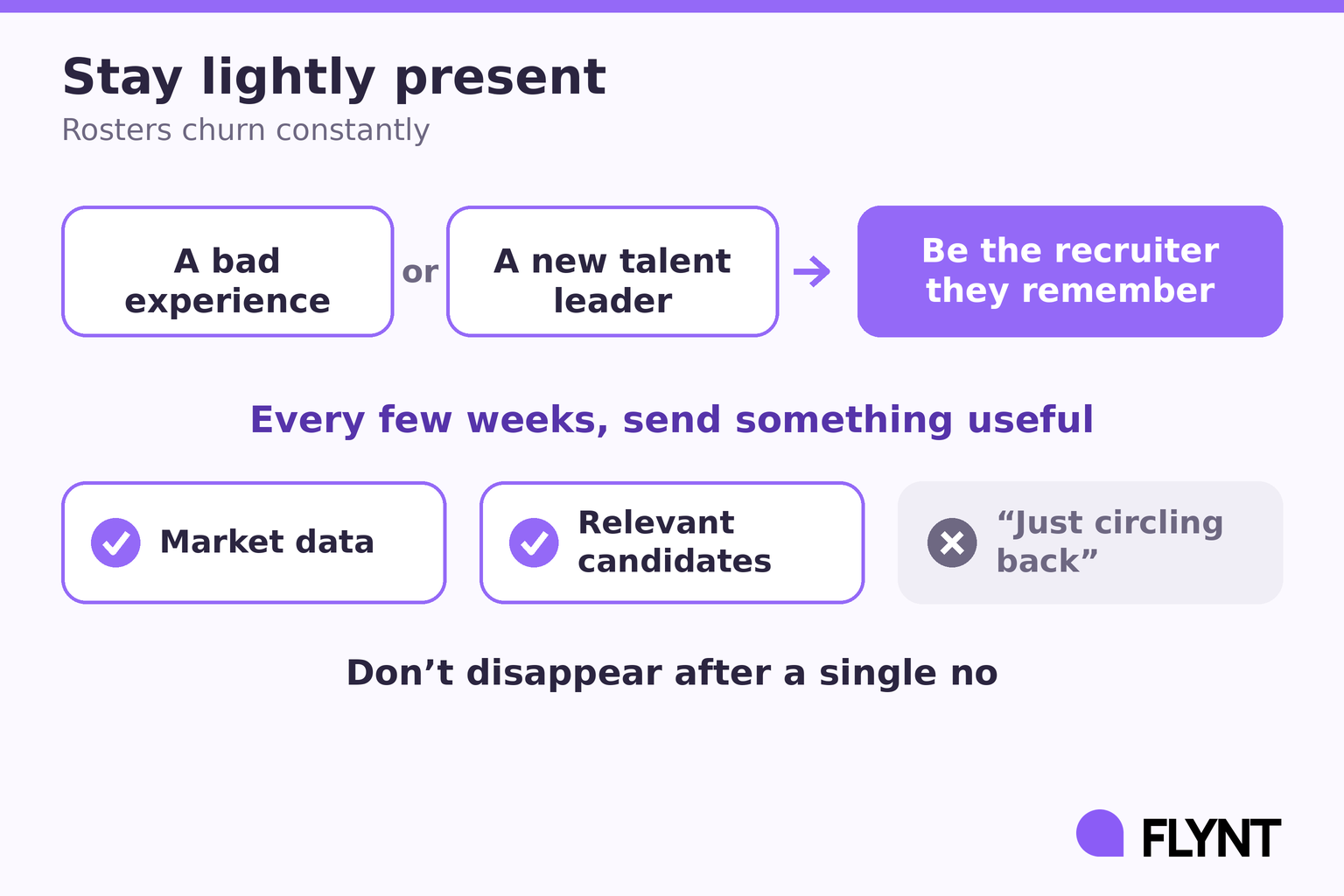
Agency rosters churn constantly, and the usual trigger is a bad experience or a change of talent leader. Your job is to be the recruiter they remember at that moment, which means staying lightly present with something useful every few weeks rather than disappearing after a single no.
Why not to discount your way in
A client acquired on price is anchored on price permanently, and you will spend the relationship trying to undo the first thing you told them about yourself.
Frequently Asked Questions
How do I get added to a preferred supplier list?
Usually not by asking. Most additions happen after you have delivered on a role that sat outside the existing arrangement, which is why taking the difficult role first is the standard route in.
How often should I follow up with a company that already has agencies?
Every few weeks with something useful, rather than a check-in. Market data and relevant candidates both qualify. "Just circling back" does not.
Is it worth being the fourth agency on a contingency role?
Rarely. Your time is better spent finding the role the other three are not working.
The way past an incumbent is usually a role they cannot fill or a company contacted before the posting goes live. Flynt finds both, watching funding, acquisitions and new job postings across your market. See it at tryflynt.ai.