
Most recruiters do not choose a recruiting niche. They fall into one, usually because their first two placements happened to be in the same sector, and then spend years in a market they never evaluated.
The four tests of a recruiting niche worth building on
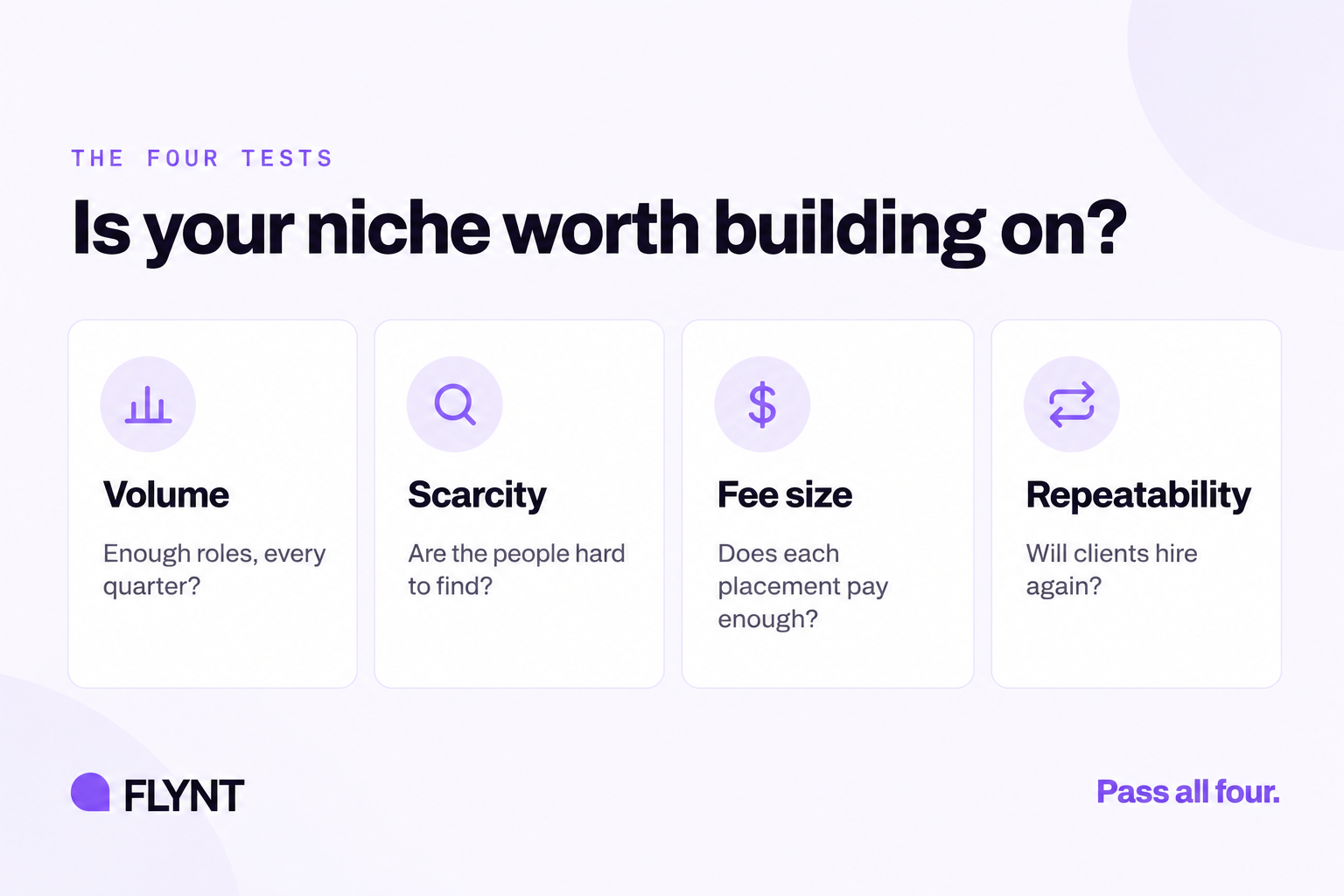
A niche worth building on has to pass four tests.
Volume
Are there enough roles, continuously? Not in a boom, but in a normal quarter and a bad one. A market with forty open roles nationally will not support an agency, however much you enjoy it. Check live postings over a few weeks and count honestly.
Scarcity
Are the people genuinely hard to find? If a company can fill the role from applicants to their own advert, they do not need you, and the ones who try you once will not come back. Your fee is paid for access to people who do not apply.
Fee size
What does a placement actually pay? A market with high volume and low salaries can work, but it requires throughput a small team may not have. Multiply a realistic placement count by a realistic fee before committing.
Repeatability
Will a client who hires once hire again? Markets where companies build teams, rather than filling a single senior seat every few years, produce the compounding revenue that makes an agency stable.
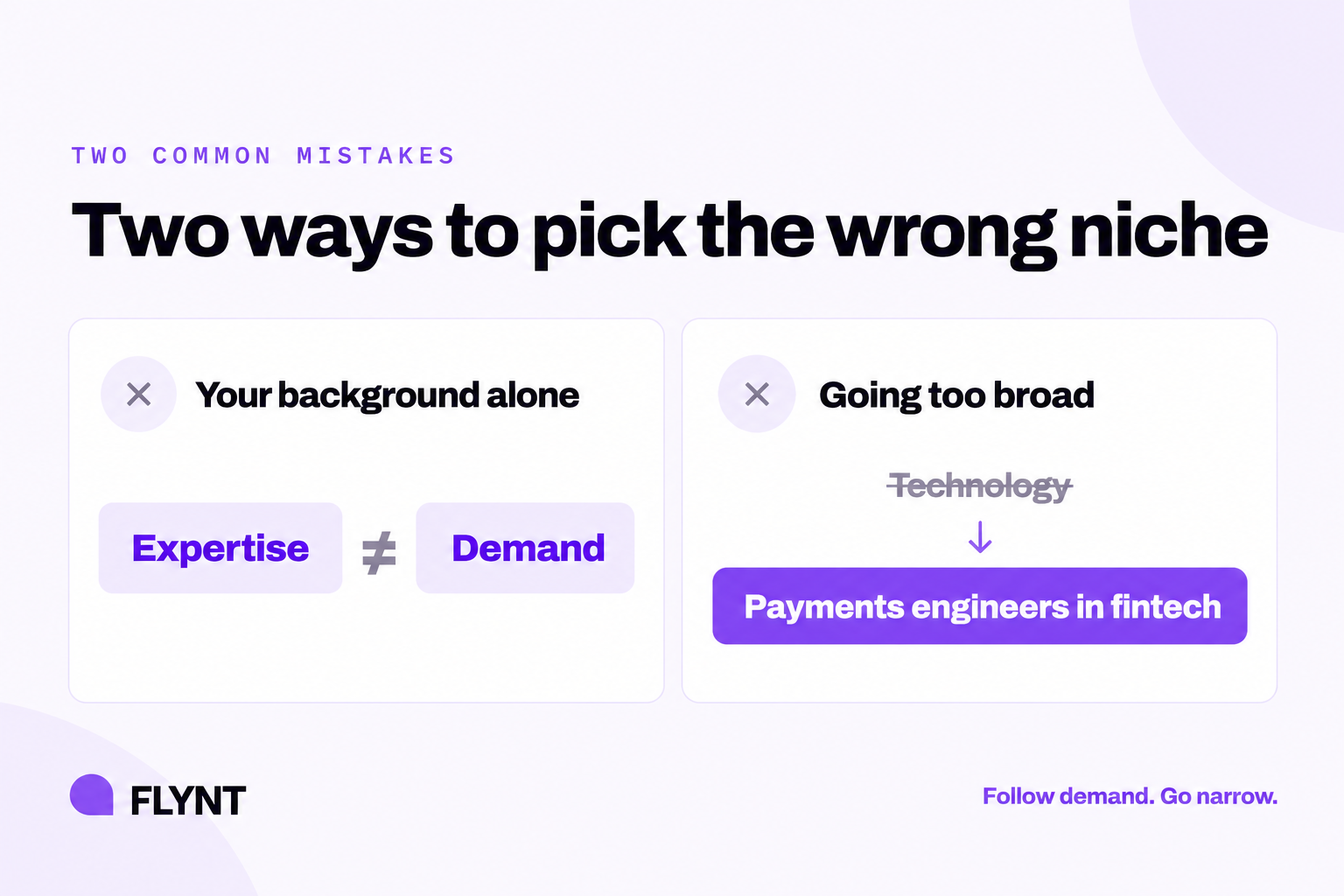
Two mistakes recruiters make when choosing a niche
The first is choosing based on your own background alone. Having worked in an industry gives you credibility and vocabulary, which are real advantages, and neither of them creates demand. Plenty of recruiters are experts in markets that cannot pay them.
The second is choosing too broadly out of fear. Generalist agencies lose to specialists. "Technology" is not a niche, it is a sector containing hundreds of niches. The narrower you go, the more obviously you are the right call, and the less you compete on price. Being the person who places payments engineers in fintech is a business. Being a technology recruiter is a description.
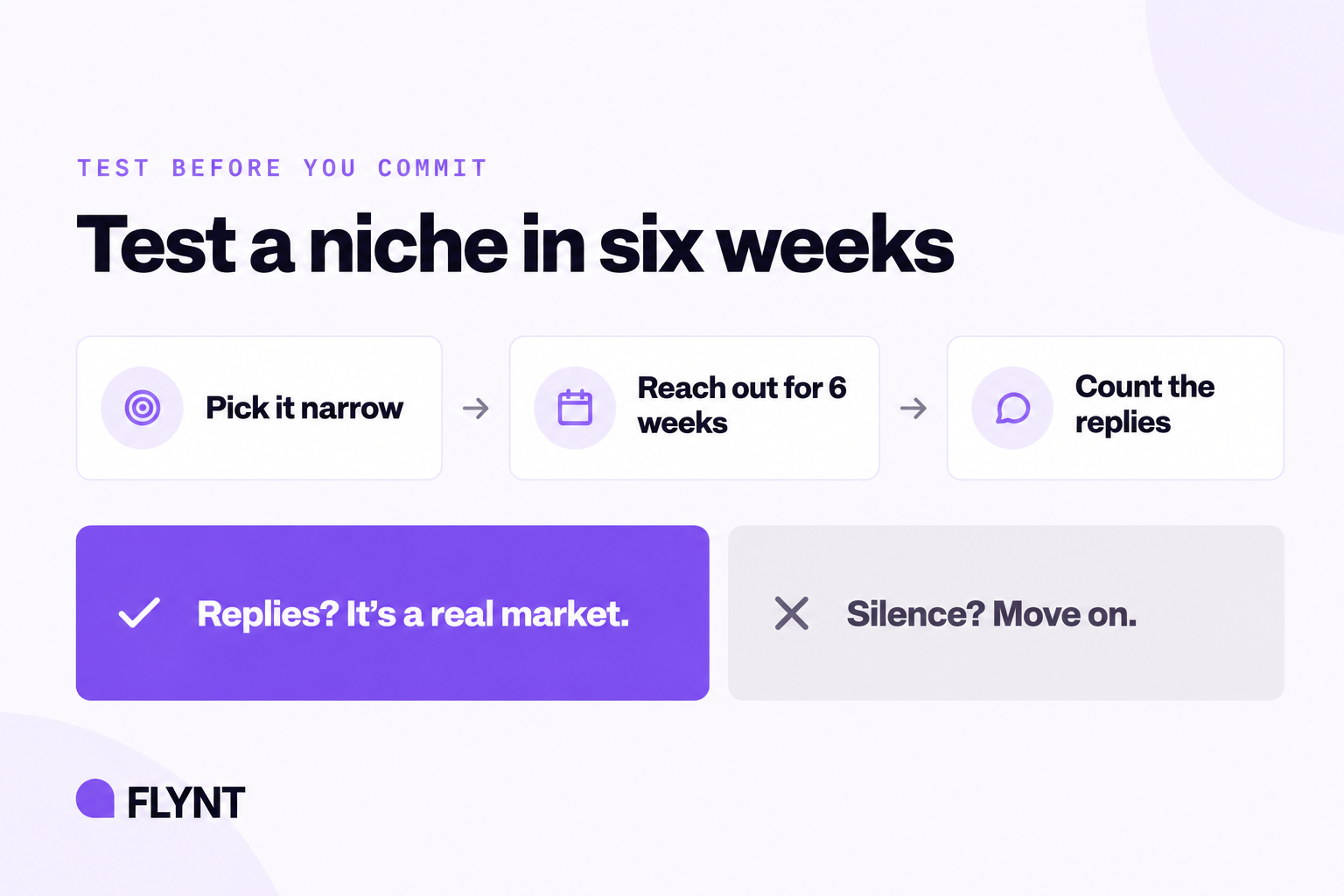
How to test a recruitment niche before you commit
Pick the narrowest version of the niche you are considering, run business development into it for six weeks, and count the conversations. A market that is real will produce replies from people who recognise that you understand their problem. A market that is not will produce silence, and six weeks is a cheap way to learn that.
What changes once you have chosen
The whole of your business development gets easier, because you finally know who to watch. A defined niche turns a vague daily question into a specific one: which companies in this market changed today.
Frequently Asked Questions
How narrow should a recruiting niche be?
Narrow enough that you can name the companies in it, broad enough that there are hundreds of relevant roles a year. For most boutique agencies that means one function inside one sector, such as platform engineers in fintech.
What is the most profitable recruitment niche?
There is no single answer, because profitability depends on fee size multiplied by repeatability in your market. The most profitable niche for you is usually one where salaries are high, candidates are genuinely scarce, and clients build teams rather than making single hires.
Can I change my recruitment niche later?
Yes, and most agencies do. The practical approach is to keep serving existing clients while pointing all new business development at the new niche for two quarters.
Once you have chosen a niche, the daily job becomes knowing when the companies in it start hiring. Flynt watches job postings, funding rounds and acquisitions across your market and brings you the companies worth contacting. See how it works at tryflynt.ai